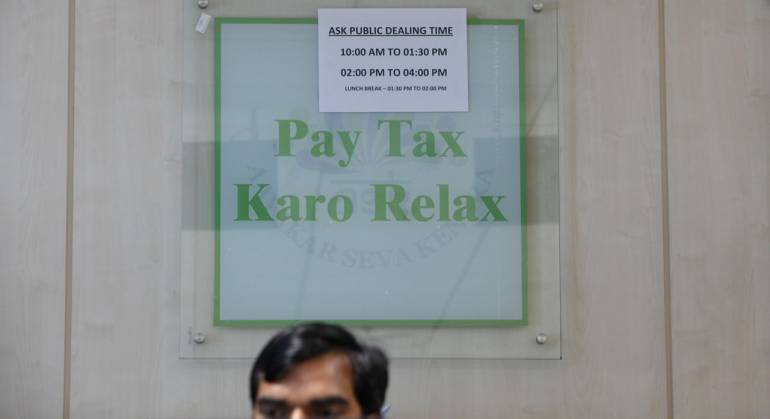
Not a good news for Amazon, Google, Netflix, Facebook, Twitter! Here is what Income Tax dept is planning

Through the Finance Act, 2018, the government had introduced the concept of 'Significant Economic Presence' (SEP) in the Income Tax Act under Section 9(1)(i) for taxation of non-residents in India by increasing the scope of the definition of 'business connection'.

Companies like Amazon, Google , Netflix, Facebook, Twitter, provide online services and have large user base in India. (FE/Reuters)
Seeking to tax overseas online companies deriving economic value in India, the I-T department today sought industry views on the revenue and user thresholds to determine if they have ‘significant economic presence’ in the country. Companies like Amazon, Google , Netflix, Facebook, Twitter, provide online services and have large user base in India.

Through the Finance Act, 2018, the government had introduced the concept of ‘Significant Economic Presence’ (SEP) in the Income Tax Act under Section 9(1)(i) for taxation of non-residents in India by increasing the scope of the definition of ‘business connection’. The definition clarified that a non-resident’s SEP in India shall constitute ‘business connection’ of the non-resident in India.

For this purpose, SEP was defined to mean any transaction in respect of any goods, services or property carried out by a non-resident in India including provision of download of data or software in India if the aggregate of payments arising from such transaction or transactions during the previous year exceeds the amount as may be prescribed. Also systematic and continuous soliciting of its business activities or engaging in interaction with such number of users as may be prescribed, in India through digital means would constitute as SEP.

Although the provisions of SEP were introduced by the Finance Act 2018, the thresholds to determine the SEP of non-residents were awaited and the income tax department today sought stakeholder comments by August 10 on the same. Comments have been invited on three aspects– revenue threshold of transaction in respect of physical goods or services carried out by a non-resident in India.

Secondly, revenue threshold of transaction in respect of digital goods or services or property including provision of download of data or software carried out by a non-resident in India. Third, threshold for number of ‘users’ with whom a non-resident engages in interaction or carries out systematic and continuous soliciting of business activities in India through digital means.

“These provisions are targeted at the digital players who are earning revenues from the vast Indian consumer base over the digital platforms without opening a brick and mortar shop. With the taxing mechanism in place, the new and emerging business models operating remotely through digital medium will come within the ambit of Indian taxation, paying their fair share of taxes in India,”

“It seems that the Indian government has made it clear that supply of physical goods could also lead to a SEP. Determination of SEP by number of users could lead to several digital companies being caught in the net inspite of getting insignificant revenue from India”. The definition of business income as provided through Explanation 2A to Section 9(1)(i) also provided that the transactions or activities shall constitute SEP in India, whether or not the agreement for such transactions or activities is entered into in India or the non-resident has a residence or place of business in India or renders services in India.

The Maharashtra Cooperative Housing Society Bye-Laws

https://www.commonfloor.com/guide/wp-content/uploads/2014/01/Maharashtra-Housing-society.jpgMaharashtra Co-operative Housing Society Bye Laws offer a clear set of guidelines for management of cooperative housing societies in the state of Maharashtra. Maharashtra Co-operative Housing Society Bye Laws acts in accordance with the rules drafted in the Maharashtra Co-operative Societies Act of 1960. Each housing society needs to follow the rules as listed in the Maharashtra Co-operative Housing Society Bye Laws to qualify as a registered housing society.

Maharashtra Co-operative Housing Society Bye Laws https://drive.google.com/open?id=1Uiw5fv0JG3jFYXsbO-MWSgR_KYPERQrb

The benefits of taking an education loan

Timely education loan repayments build the child’s credit history, and also imparts financial discipline in the child

A student loan would obviate the need to disturb your own investment portfolio and help preserve your financial goals, including retirement plans. Photo: ThinkStock
A student loan would obviate the need to disturb your own investment portfolio and help preserve your financial goals, including retirement plans. 
 
Education is expensive, be it in India or overseas. However, as a parent, you are always in a quandary whether to tap into your savings or avail an education loan. In India, good quality higher education can cost anywhere from 10 lakh to 30 lakh, while sending your child overseas can cost at least 30 lakh. 

For those who maintain significant fixed deposits, it’s an easy choice: to not take an education loan priced at, say, 13% and to re-allocate a portion of bank deposits (yielding 7% per annum) towards children’s education. For a vast majority, however, it isn’t quite so straightforward. Most have to disturb retirement or emergency funds or liquidate assets like real estate, equities and gold. So, it is important to be familiar with the available options.  

Education loans
Education loans or student loans are applied for by the student, along with her parent, guardian or a third-party guarantor. The purpose of the loan is to cover all expenses incurred while studying, which typically include admission, tuition, examination and library fees; boarding and lodging; cost of computers, books, and other equipment; travel expenses and health insurance. 

At public sector banks, for a loan up to 4 lakh, parents serve as co-applicants; between 4 lakh and 7.5 lakh, parents are co-applicants and a third-party guarantor is also required; while for loans over 7.5 lakh, banks additionally ask for collateral. Women applicants are entitled to a 0.5% interest rate concession. 

Being a priority sector lending, most banks and non-banking financial companies (NBFCs) are keen to disburse education loans but the loan application process, along with terms and conditions, vary between institutions. Some private banks and NBFCs offer a wide selection of high-ticket unsecured education loans for up to 15 years. Normal credit appraisal criteria notwithstanding, the maximum loan amount is predicated upon ranking of the college in which admission has been obtained. 

Why choose an education loan

Protects savings: A student loan would obviate the need to disturb your own investment portfolio and help preserve your financial goals, including retirement plans. 
Contingency: If unprecedented events prolong the course’s duration, your funds can be a back-up to safeguard your child’s education schedule. 

Tax deduction on interest: Under Section 80E of the Income tax Act, you can claim unlimited tax deduction on interest paid for 8 years. There’s no tax benefit on principal repayments. 

Moratorium on repayments: EMIs can be scheduled to commence 6-12 months after completion of the course. That can be a relief for young professionals. 

Build credit history: Timely loan repayments build the child’s credit history and enhance her ability to access credit facilities in years to come. 

Teach responsibility: Managing loan repayments will impart financial discipline in the child.

Alternate options: Education loan approvals are not a cakewalk. Student loan (unsecured) portfolios have not been performing as envisaged. Banks and NBFCs are facing high delinquencies. So, prepare for a robust evaluation process which could result in either rejection or downsizing of the loan. You can explore personal loan or loan against property too, but they have their own pros and cons (see graph).  

When to use your own funds
For children’s education many of us have been regularly investing. Unless you are anticipating any other major call on your money, go with your own funds instead of creating the attendant stress of managing loan liability. Accordingly, at a rate of return of 10% or less, use own funds.

Both my children studied at American universities, and I went for a judicious mix of own and loan funds, retaining the option to react adroitly in any situation. For more funds, one could negotiate an increased loan amount and a longer tenor. If nothing came up, one could prepay the loan and rest easy. With the benefit of hindsight, I must confess that the combo route worked well.

Your own funds or loans or a combination, there is no one-size-fits-all. Assess your own priorities and personal financial landscape, and do seek professional advice, if necessary.

Delayed interest payment can increase education loan burden

A delayed start to education loan EMIs does not mean that the interest is not applicable for the repayment holiday period

Banks may allow for interest payment along with the EMIs after the moratorium period. Photo: iStockBanks may allow for interest payment along with the EMIs after the moratorium period.Marketing campaigns for education loans from banks or from non-banking financial companies make it a point to highlight the repayment holiday or moratorium period on the repayment of the loan.
In most cases, the moratorium period extends up to six months after the completion of the course, or till the time the student lands a job, whichever is earlier. Some lenders also provide the flexibility of extending the moratorium by another six months if the student is unable to find a job. 

What this means is that you do not have to worry about the payment of EMIs for the education loan till the moratorium period. However, this can increase your overall outgo towards the loan. 

Interest kicks in immediately
A delayed start to the EMIs does not mean that the interest is not applicable for the repayment holiday period. In fact, the interest calculation starts immediately after the loan is disbursed. 

For instance, for an education loan for a 2-year course taken in June 2018, the repayment holiday will continue till December 2020, and the EMIs will start from January 2021, but the interest will be applicable for the entire period from June 2018 to December 2020.

Earlier, banks and NBFCs regularly allowed borrowers to start paying this interest after the repayment holiday. In such cases, the interest was accumulated for the period and got compounded. 

However, since 2016, most banks have started demanding repayment of interest during the repayment holiday period itself. This change has happened due to stricter implementation of loan repayment guidelines, with many banks already stressed under NPAs (non-performing assets) from other segments. This is typically done by the parents or guardians of the student during the course of study, and then the actual repayments in the form of EMIs are taken over by the student concerned. 

Banks, however, may still allow for interest payment along with the EMIs after the moratorium period. But the applicant will have to place a request for the same.

What works better for a borrower
Just like any other liability, delay in payment only compounds the burden. Similarly, if the interest payment is delayed, the interest part gets compounded and then gets added to the principal. A new interest amount is then calculated on the new total for subsequent months. Let’s take the example of a 20 lakh loan taken at 10% interest per annum for a two-year course. If the interest payment is delayed by a year, in the second year the interest will be applicable not just on the principal 20 lakh, but also on the 2 lakh that was supposed to be paid on interest. That will be an addition of 20,000 in annual interest payment in the subsequent year. The interest burden will increase, in a similar manner, in the third year in case the repayment holiday continues, and so on. 

Therefore, repayment of interest right from the beginning actually works in favour of the borrower.

Filing income tax returns? You need to disclose these assets to the taxman

You have to disclose the details of immovable properties i.e. land and building owned by you in schedule AL


In order to detect cases of disproportionate assets owned by a taxpayer as compared to his known sources of income, the Income Tax Department wants taxpayer with income over Rs 50 lakh to report various assets and liabilities in income tax return (ITR). The requirement was implemented in 2016 and has since been modified from time to time. Let us discuss the latest requirements in detail.

To whom this requirement is applicable: It is not that each and every tax payer has to report details of his assets and liabilities. The requirement to report the assets and liabilities is only applicable in case your taxable income exceeds Rs 50 lakh for the year. So, people who are eligible to file ITR 1 (Sahaj) do not have to furnish these details. In case you are engaged in a business and thus furnishing your balance sheet in the ITR, you are required to furnish only details of assets which are not already disclosed in the balance sheet.

What assets are required to be reported: The format for disclosure of assets and liabilities is the same for all ITRs, except form ITR 3 and 4 wherein you are required to submit details of interest in the firm in which you are a partner. You are required to furnish details of your assets and liabilities as on March 31 under the AL schedule. So, any asset disposed of during the year will not form part of the schedule.

Disclosure for immovable properties: You have to disclose details of immovable properties i.e. land and building owned by you in schedule AL. While submitting the details of immovable properties, you have to mention the description, cost and address of the property. Please note that besides disclosing assets purchased by you, you also have to disclose details of any immovable asset received as gift or inherited by you. In case you inherit a house in your ancestral village, you have to furnish the details here. Even if you are a joint owner of a property, you still have to furnish the details in cases where you have inherited a house jointly with your relatives or bought any property jointly. While disclosing the cost in such cases you may face some problems as you may not have the details at which the person, from whom you had inherited or received the same as gift, had purchased it for. In order to comply with the requirement and as a safe measure you can indicate the market value as on April 1 as this is acceptable as cost for capital gains calculation purposes. In case any money is borrowed for immovable property or is borrowed on security of the asset, the same also needs to be disclosed in the schedule.

Disclosure of movable assets: Under movable properties, the assets to be disclosed include financial assets like cash in hand, bank balances, shares and securities, loans and advances, and other movable asset like jewellery, bullion, vehicles, yachts, boats and aircraft, work of art etc as on March 31. Under jewellery, you are required to disclose details of jewellery but also bullion held in raw form. In case you own any gold bar or coins, the cost of the same needs to be disclosed in the schedule. In case of assets inherited, the same principle as discussed above should be used. While disclosing the details of bank balances, one will have to disclose details of your loan account in case the same has a positive balance. In case of shares and securities, in cases where you have received these by way of gift or as inheritance and you do not know the cost, the market price as on April 1, 2001 may be furnished as a safeguard.

Traditional insurance policies may be treated as investments, but term plans, where you do not get any money back if you survive the policy term, cannot be treated as investment. Since no distinction is made between traditional policies and term plans, I would advise you to include premiums paid till date on term plans as well under the head insurance policies. You are also required to disclose the details of your vehicles, yatch, boats, aircraft etc. Vehicles which are not used and yet to be discarded or are being maintained as antique piece also needs to be disclosed.

10 benefits of filing ITR even if you are below the taxable bracket

If you don’t file ITR, the belated return could lead to extra interest at 1% per month for the remaining tax payable by you


Most millennials think that if their salaries fall below the taxable bracket they shouldn’t be filing ITR (Income Tax Returns). However, that is not true. One needs to file income tax return the time they enter a job and start earning. Experts say that apart from being a good corporate citizen, an income tax return also serves as a proof of income earned by an individual and total taxes paid. So it is always advisable to file one’s tax return even when the taxable income falls below the basic exemption threshold.

Most millennials think that if their salaries fall below the taxable bracket they shouldn’t be filing ITR (Income Tax Returns). However, that is not true. One needs to file income tax return the time they enter a job and start earning. Experts say that apart from being a good corporate citizen, an income tax return also serves as a proof of income earned by an individual and total taxes paid. So it is always advisable to file one’s tax return even when the taxable income falls below the basic exemption threshold.
ITR Receipt is an important document| Having an ITR receipt is important because it is more detailed than Form 16, entailing your income and taxation along with revenue from other sources.

ITR Receipt is an important document| Having an ITR receipt is important because it is more detailed than Form 16, entailing your income and taxation along with revenue from other sources.
Use as address proof| ITR receipt is sent to your registered address, which can serve as residential proof.

Use as address proof| ITR receipt is sent to your registered address, which can serve as residential proof.
Helps the bank loan documentation process easier| Being a diligent income tax filer makes it easier for banks to assess your source of income when you apply for loans like an auto loan, home loan etc.

Helps the bank loan documentation process easier| Being a diligent income tax filer makes it easier for banks to assess your source of income when you apply for loans like an auto loan, home loan etc.
Compensate losses in the next financial year| Unless you file the ITR, you cannot recompense your expenses/losses in the previous financial year to the current. As per the income-tax provisions, if tax returns are not filed on time, unadjusted losses (with some exceptions) cannot be carried forward to future years. Hence, to ensure that the losses are carried forward for future adjustment, a tax return would be required to be filed.

Compensate losses in the next financial year| Unless you file the ITR, you cannot recompense your expenses/losses in the previous financial year to the current. As per the income-tax provisions, if tax returns are not filed on time, unadjusted losses (with some exceptions) cannot be carried forward to future years. Hence, to ensure that the losses are carried forward for future adjustment, a tax return would be required to be filed.
Helps to avoid extra interest| If you don’t file ITR, the belated return could lead to extra interest at 1% per month for the remaining tax payable by you. For example, banks would deduct tax from interest on fixed deposits exceeding a certain threshold. To claim a refund of tax deducted by the bank (if any) on the interest income, a tax return would be required to be filed regardless of the taxable income.

Helps to avoid extra interest| If you don’t file ITR, the belated return could lead to extra interest at 1% per month for the remaining tax payable by you. For example, banks would deduct tax from interest on fixed deposits exceeding a certain threshold. To claim a refund of tax deducted by the bank (if any) on the interest income, a tax return would be required to be filed regardless of the taxable income.
Avoid penalties or scrutiny from the tax department| From FY 2017-18 Rs 10,000 would be levied for non-filing of ITR. This black mark will remain for years to come.

Avoid penalties or scrutiny from the tax department| From FY 2017-18 Rs 10,000 would be levied for non-filing of ITR. This black mark will remain for years to come.
Credit Card Processing| Banks can reject your credit card application if you haven’t filed your ITR.

Credit Card Processing| Banks can reject your credit card application if you haven’t filed your ITR.
For a hassle-free visa application procedure| At times visa authorities ask for copies of past tax returns, hence to apply for a visa a tax return would be required to be filed. Embassies, especially those of US, UK, Canada etc. when processing your foreign visa application, are particular about your tax-compliance.

For a hassle-free visa application procedure| At times visa authorities ask for copies of past tax returns, hence to apply for a visa a tax return would be required to be filed. Embassies, especially those of US, UK, Canada etc. when processing your foreign visa application, are particular about your tax-compliance.
To buy an insurance policy with a higher cover| If insurance companies have reasons (non-compliance) to believe that you are a tax-evader, they will not give you policies with more cover.

To buy an insurance policy with a higher cover| If insurance companies have reasons (non-compliance) to believe that you are a tax-evader, they will not give you policies with more cover.

Makes life easier for freelancers and independent professionals| Freelancer or self-employed people don’t have Form16. This is the only document they have to show that he has filed the ITR. Without this, they can face funding issues and transactional problems. (Text by: Archit Gupta, Founder and CEO, ClearTax| All images are in public domain, sourced from www.pexel.com)


Makes life easier for freelancers and independent professionals| Freelancer or self-employed people don’t have Form16. This is the only document they have to show that he has filed the ITR. Without this, they can face funding issues and transaction problems.

5 ways to e-verify your income tax return

On one Electronic Verification Code, only one online income tax return can be verified


After filing your income tax returns, you need to get your ITR-V (return filing acknowledgement) verified. Earlier, it was mandatory for taxpayers to send the physical copy of ITR-V duly signed to income tax department in Bengaluru within 120 days of e-filing income tax return. Now, taxpayers can e-verify it in minutes in five different ways as explained here.

How e-verification process works?
Your income tax returns can be e-verified by generating an Electronic Verification Code (EVC) which is a 10-digit alphanumeric code and unique to a PAN. On one EVC code only one online income tax return can be verified, so in case you revise your income tax return, you need to generate another EVC. After verifying your return via EVC, you are no longer required to send the physical ITR-V to CPC Centre, Bengaluru. Let’s understand ways to obtain EVC code:

1. E-verification through Net Banking
Login to your net banking and check whether they are authorised by the income tax department to provide e-verification facilities. Also, your PAN should be validated via KYC before using this method. Then login to your net banking account and select e-verify option, which will redirect you to the government e-filing portal. Here, click on my account on e-filing page which will generate the EVC. This will be sent on your registered email id and mobile number. Using this EVC you can then e-verify your return.

2. E-verification through Aadhar card OTP
To use this e-verification mode, login to government’s e-filing portal. Your Aadhar card should be linked with this portal to generate OTP for e-filing. Then click on the option 'generate Aadhaar OTP to e-Verify my return'. After Aadhaar is authenticated and linked, an OTP will be sent to the taxpayer’s registered mobile number. Then this OTP can be used to e-verify the tax return. This OTP is valid for 10 minutes. After completing this e-verification method, you can download the acknowledgement from registered email address.

3. E-verification through government e-filing portal
To e-verify IT returns using government e-filing portal www.incometaxindiaefiling.gov.in, taxpayers need to meet certain criteria i.e. income should be less than Rs 5 lakhs and you do not claim a refund. To use this mode, directly log on to the government’s e-filing portal mentioned. After login, click on e-verify and the EVC is sent to your registered email address and mobile number. Use this EVC to complete the e-verification process. However, it’s recommended to use other methods discussed for e-verification if you don’t meet the set criteria or you are unsuccessful to complete the process.

4. E-verification through Bank’s ATM
Some banks are registered with the IT department for providing e-verification facility. So check with your bank before proceeding. EVC can be generated by swiping your ATM card in your bank ATM and by selecting an option of Pin for e-filing. Then EVC will be received on registered mobile number which can be used to verify your income tax returns on government portal. This method is useful if you are unable to login to your net banking account to generate EVC.

5. E-verification through Demat account
Before using this method, you need to provide your depository details on government e-filing portal which should be confirmed by the depository. Then select profile setting on portal and pre-validate your demat account. Choose verification mode as EVC using a demat account. You will receive EVC on your registered mobile number. Enter this EVC on e-filing portal to complete the verification process.

Don’t forget to mention these small things while filing income tax returns

Here are a few seemingly less important things that all salaried individuals should take in account while filing their income.

It is July. The first quarter of the financial year has come to an end and appraisals too are behind for most of salaried employees. Most of you must have got your Form 16 from your employers. That paves the way for filing of income tax returns as the July 31 deadline is fast approaching. Income tax return filing is an important act and has its own benefits if you do it before the deadline. Here are a few seemingly small things that all salaried individuals should take care of while filing their income.

Check your Form 26AS

This is the buzzword and do not miss it. “Tax authorities match the entries in Form 26AS with your submissions, You must check your Form 26AS online and ensure that there are not any mismatches between your income tax returns and the contents of Form 26AS.”

Check the year and format

“You must be careful while filing your income tax returns. Do confirm if you are filing for the correct assessment year and you have chosen the right format, There are multiple formats for different types of tax payers. Also these formats change over the years. If you are filing income tax returns for multiple years, you have to be doubly careful.

Mutual fund investments

Mutual fund investments are catching up big time and there are many first time investors in India. Though there was no long-term capital gains on equity funds till last financial year, the taxes on short-term capital gains on both equity and non-equity funds were payable. So was the case with long-term capital gains on non-equity funds. That necessitates you to run through your mutual fund statements and your bank statements. “If you have opted for systematic investment plans (SIP) or systematic withdrawal plans (SWP), you will have to compute taxes and file accordingly,

Interest income

“Do not forget to mention the interest earned on your saving bank accounts and fixed deposits,  You should be adding this interest income to your gross income and then proceed to compute the income tax. Do check your bank account statements for interest earned by various fixed deposits and bonds you hold. If you have invested in a bank fixed deposits

 Income of minors

“If you have a minor son and daughter then the interest income earned in their name must be added to your income and then offered to tax, The income earned in the name of kids must be added to the income of that parent whose income is higher among two.

Provide correct bank details

Last but the most important, mention your correct bank account details while filing income tax returns. This is essential to process your tax refund, if any.
Special allowance re

10 documents you need to file your income tax return

By
Preeti Motiani

10 documents you need to file your income tax return

By
Preeti Motiani